Shangjia Zhang
NASA Hubble Fellowship Program Sagan Fellow · Columbia University · (He/Him)

Pupin Hall 1026
Columbia University
New York, NY, USA
I am a computational astrophysicist who studies how planets form. Breakthrough observatories such as ALMA, JWST, and extreme adaptive optics instruments now show planet-forming disks in remarkable detail. Rings and gaps are ubiquitous, and some disks also show spirals, shadows, and warps. We can map their dust, gas motions, and temperatures, and after more than a decade of observations, we can even see some disks change. My goal is to turn these observations into a physical picture of how planets form.
My research has two connected threads:
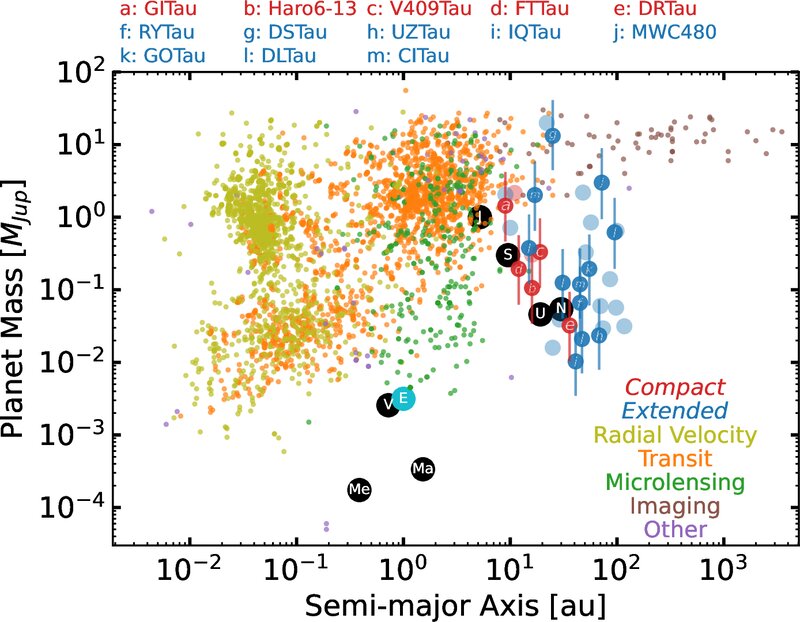
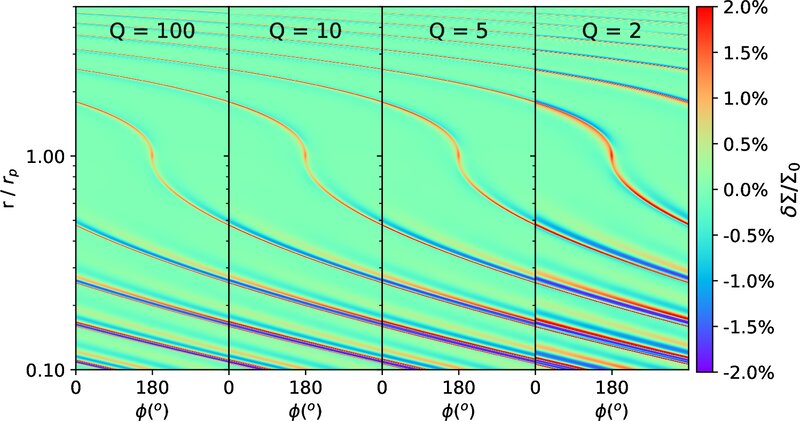
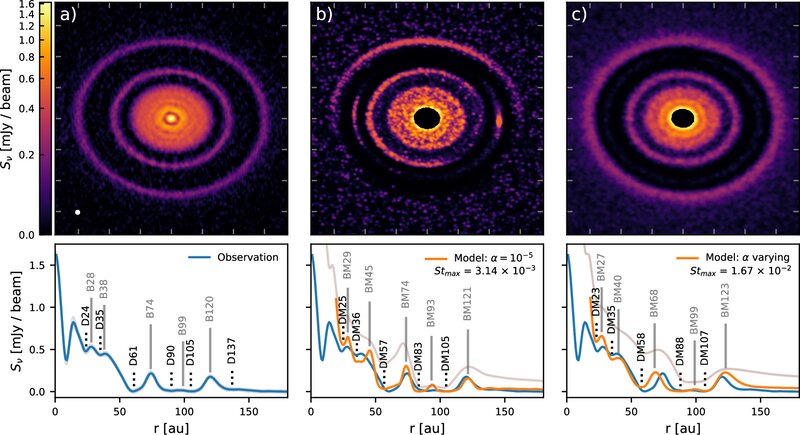
- How planets and disks shape each other. I build first-principles, multi-physics simulations of planet–disk interactions, with multiple dust species, multi-frequency radiation, and dust–gas coupling. I use them to tell which substructures are carved by planets and to infer the young planet population in disk surveys such as DSHARP and Taurus. With upcoming surveys such as Roman, I plan to connect this population to mature exoplanets.
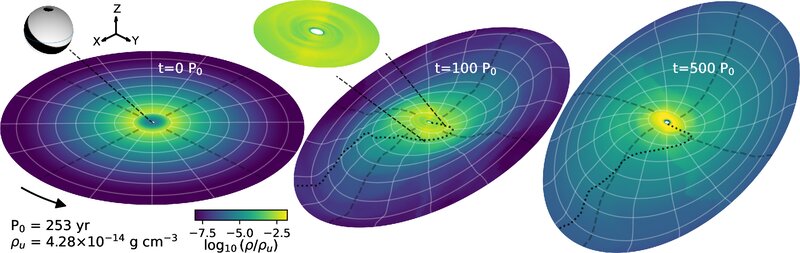
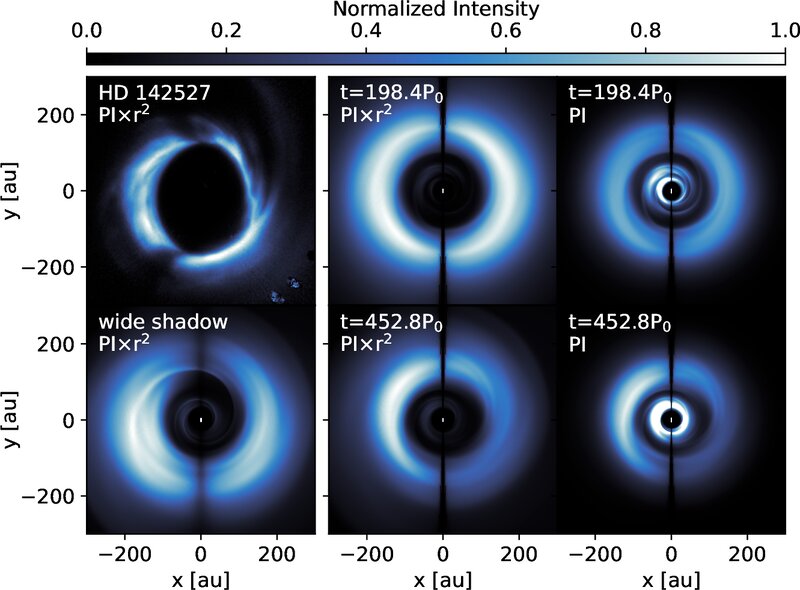
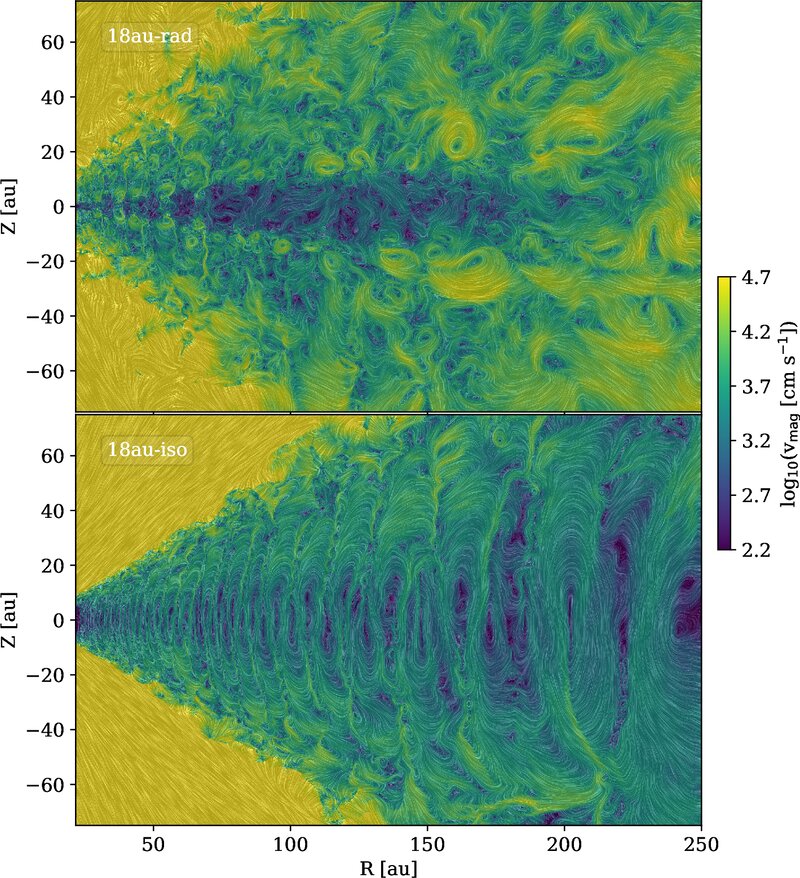
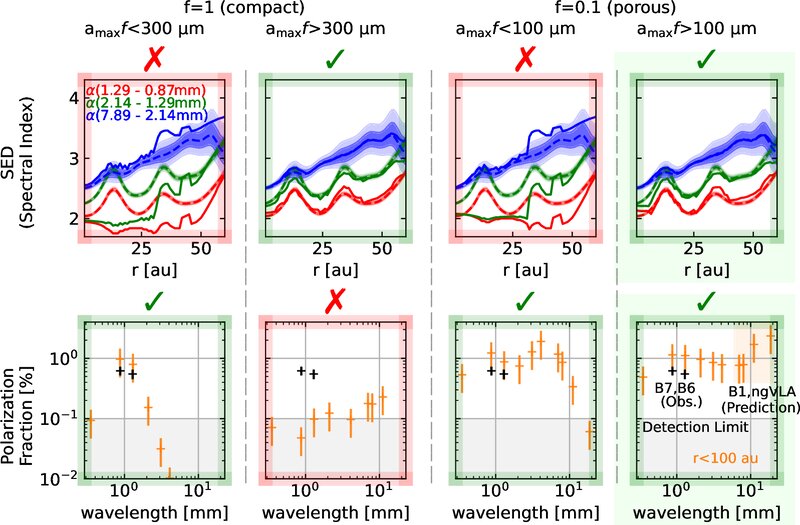
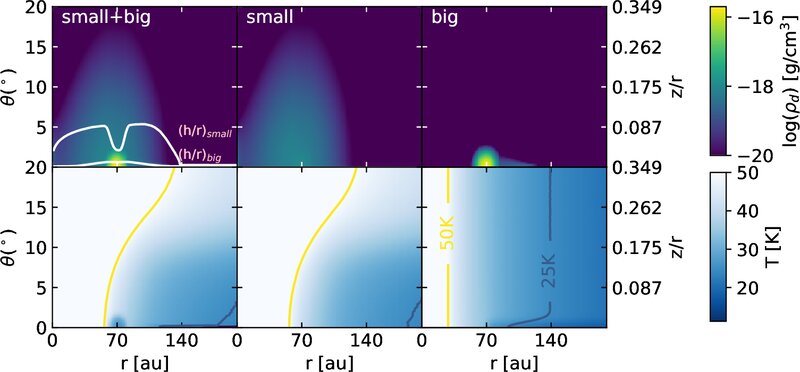
- New probes of disk physics. I measure properties that were hard to reach before, such as dust grain size and porosity from multi-wavelength data, and how fast disks cool. I am working to reconstruct the 3D structure of disks from gas kinematics. I also find new mechanisms that drive disk evolution, such as shadow-driven dynamics, and use how disks change over time to probe their physics.
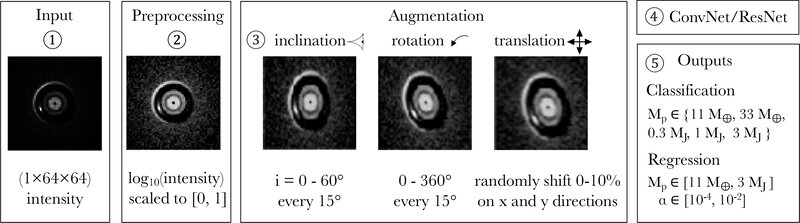
Two methods make this possible. Supercomputing: large radiation-hydrodynamical simulations on modern CPUs and GPUs, including the new GPU code PASTA. Machine learning: I was among the first to infer planet masses directly from disk images with neural networks (PGNets). Next, I plan to use AI to make these complex models fast enough to compare with data.
I am an NHFP Sagan Fellow at Columbia University (2024–2027), hosted by Prof. Jane Huang, and an incoming Research Fellow at the Flatiron Institute’s Center for Computational Astrophysics (2027–2028). I received my Ph.D. from the University of Nevada, Las Vegas, working with Prof. Zhaohuan Zhu, and my B.S. from the University of Michigan, working with Prof. Lee Hartmann, after two years at Nanjing University.
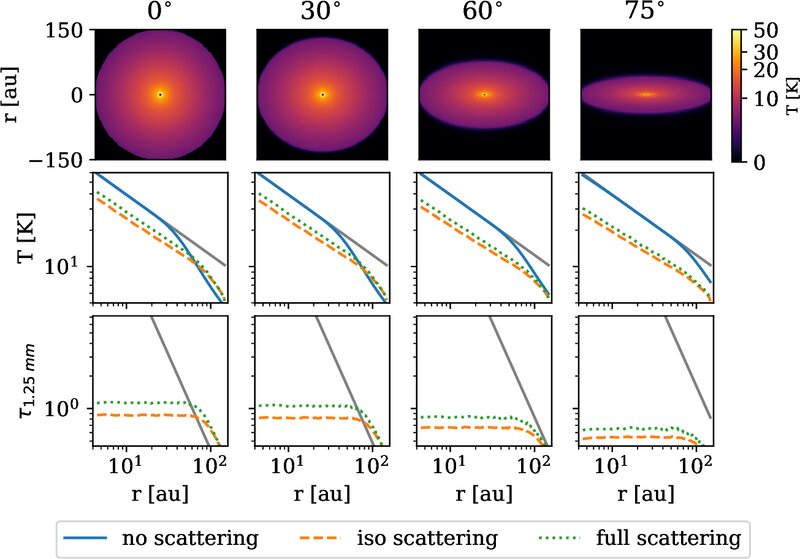
My simulations use the radiation module of Athena++ and the new GPU code PASTA, both developed by Dr. Yan-Fei Jiang. See my research page for movies and highlights, or my full publication list and CV.
news
| Oct 01, 2026 | Upcoming: I will give the DAMTP Astrophysics Seminar at the University of Cambridge in November 2026. |
|---|---|
| Sep 15, 2026 | Gave the Physics and Astronomy Colloquium at the University of Minnesota Duluth. |
| Aug 20, 2026 | Submitted Thermal Response of Dust and Gas to Shadows in Protoplanetary Disks I, with PhD student Xiaoyi Ma (KIAA, Peking University), to ApJ. |
| Jun 10, 2026 | New paper led by Stanley Baronett, whom I co-advised at UNLV: a framework for frequency-dependent radiation transport in stellar-irradiated disks with Athena++. |
| Feb 15, 2026 | Gave the Astrophysics Colloquium at the University of Illinois Urbana-Champaign. |
| Dec 15, 2025 | Our paper Shadow-induced Warps in Protoplanetary Disks is out in ApJL. |